 Store Locator
 (+971) 6 5330 149
How to Find Reliable Furniture Suppliers for a New Restaurant in Dubai
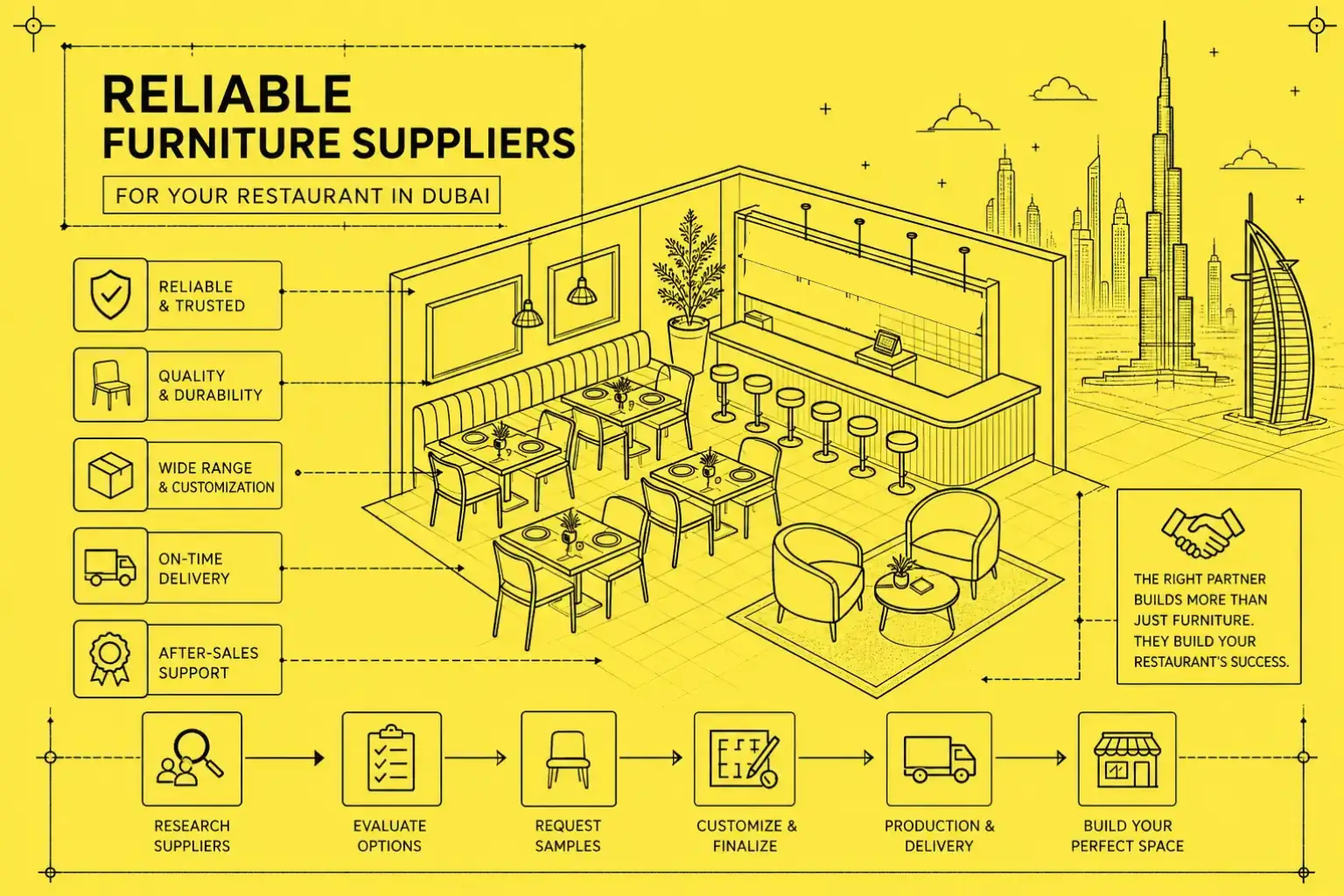 Find Reliable Furniture Suppliers for a New Restaurant
Most new restaurant owners in Dubai spend weeks obsessing over their menu and kitchen layout, then rush their furniture decision in the final weeks before opening. The result tends to show up quickly: chairs that wobble within months, finishes that crack in the humidity, lead times that push back a launch date. Knowing how to find reliable suppliers for a new restaurant setup in Dubai, furniture vendors in particular, requires understanding what separates a serious commercial supplier from a showroom that sells attractive pieces with no hospitality pedigree.
The criteria that matter include contract-grade certification, real customization capability, honest lead times, and after-sales support that holds up once the invoice is paid. Suppliers like Najmi Furniture, with decades of UAE market experience furnishing recognized F&B brands, exist in this market. But you need to know how to identify them. This guide walks you through exactly that.
Why furniture is the most expensive mistake a restaurant can make twice
Most furniture sold in the UAE looks fine in a showroom. The problem tends to surface after several months of high-volume commercial service. Home-grade materials were never designed for the friction, weight, and frequency of a commercial dining environment. When frames bend, fabrics tear, or table surfaces peel, you don’t just replace one piece. You replace a set, because mismatched furniture in a dining room is worse than worn-out furniture.
Dubai’s restaurant scene runs long hours, high footfall, and demanding aesthetic standards. Franchise operators, hotel F&B outlets, and independent concepts in the city are all benchmarking against international standards. That means furniture has to perform and look right simultaneously, which rules out most general-purpose suppliers who don’t specialize in the commercial hospitality segment. Buying furniture twice because the first round failed is not a budget line most operators plan for. Avoiding it starts with understanding what you’re actually buying.
What contract-grade certification actually means for your restaurant
Contract-grade furniture is built to withstand repetitive commercial use: daily stacking, constant seating load cycles, humidity exposure, and regular cleaning with commercial products. The certification isn’t just a marketing label, for a concise primer on how contract furniture differs from retail pieces, see what contract furniture means. It reflects specific construction standards around frame strength, joint durability, foam density, and surface treatment. Retail furniture carries none of those standards because it was never designed for a kitchen-adjacent, high-traffic environment.
In UAE and GCC procurement, the standards most commonly referenced for commercial restaurant furniture include BS 7176 for fire retardancy of upholstered pieces, the Martindale abrasion test at a minimum of 40,000 rubs for contract-grade fabric certification, and BIFMA X5.1 for structural performance. Commercial metal chairs are also typically built with 18-gauge steel frames versus the 20 to 22 gauge used in residential pieces and are rated for higher weight capacities than household equivalents. These aren’t arbitrary specifications. They reflect what actually happens in a restaurant over 12 to 16 hours of daily use. For further reading on why home furniture fails in hospitality settings, review the article on Why Home Furniture Fails in Restaurants | Commercial Grade UAE.
When evaluating any Dubai restaurant supplier, ask for product testing documentation rather than verbal assurance. A credible commercial furniture supplier should be able to show load-bearing test results, foam density specs, and material origin certificates. Ask which other commercial hospitality venues they have supplied in the UAE and request a reference. A supplier with a genuine track record won’t hesitate. One that deflects is telling you something important.
How to find reliable suppliers for a new restaurant setup in Dubai: vetting checklist
Before you shortlist anyone, run every prospective supplier through the same five checkpoints. This OS&E supplier vetting checklist for UAE restaurant openings applies whether you’re sourcing furniture, commercial kitchen equipment in Dubai, or front-of-house fit-out elements.
1. Verify contract-grade credentials
Request testing documentation for all major product categories. If a supplier cannot produce load-bearing test results or material certifications, treat that as a disqualifying signal, not a minor gap.
2. Confirm customization capability with references
Ask for completed F&B projects in the UAE, not just a capabilities brochure. A supplier with genuine production capability will have photographic records, project timelines, and contacts at the venues they’ve supplied.
3. Get lead times in writing with milestone dates
Production start, completion, quality inspection, delivery to site, all of it should be in the purchase agreement before you sign. Verbal lead time commitments are not commitments.
4. Confirm local delivery infrastructure
Ask whether the supplier has direct delivery capability in Dubai or relies on third-party freight. A supplier that manages its own logistics eliminates a layer of risk that outsourced freight arrangements often introduce at the worst possible time.
5. Clarify the after-sales policy before signing
Ask exactly what the warranty covers, for how long, and what the claims process looks like. If the answers are vague, that tells you what post-sale service will look like too. For examples of how manufacturers publish warranty terms, review a typical furniture warranty policy to see what documented coverage looks like in practice.
Customization capability: can they actually deliver your brand’s vision?
Your restaurant has a brand identity: a color palette, a material direction, a spatial feel. A standard catalogue supplier gives you whatever is already in stock. That might work for a quick-service canteen, but it won’t work for a café concept with bespoke booth seating, a specific upholstery finish, or a table size that fits your floor plan. Customization is not a premium extra. For most Dubai restaurant concepts, it’s a baseline requirement.
Contract furniture manufacturers operating in the UAE typically offer fabric selection from global suppliers, custom frame finishes, adjusted dimensions to match floor plans, and integrated branding details. The question is not whether a supplier has a customization menu. The question is whether they have the manufacturing capability to deliver it consistently across a full venue order, on time. That’s a different thing entirely.
Najmi Furniture works directly with F&B operators and fit-out teams from brief to delivery, producing custom seating, booths, and dining tables tailored to layout specifications and brand guidelines. Their portfolio includes work with recognized regional F&B brands that require both visual consistency and commercial durability across multiple outlets. That combination of manufacturing capability and F&B brand experience is what to look for in a customization-capable supplier, and illustrates how the right furniture boosts restaurant profitability in real projects.
Lead times and delivery: the numbers that can delay your opening
Custom commercial furniture in the UAE typically carries a lead time of four to eight weeks from order confirmation, depending on the complexity of the brief, material sourcing, and production queue. Simpler orders from local suppliers in Dubai and Sharjah can turn around in seven to twenty-one days. For a full restaurant fit-out, however, a minimum of six to eight weeks is a realistic working assumption. That timeline needs to be factored into your fit-out schedule before the space is handed over, not after.
Plan around your furniture timeline, not after it
Furniture procurement gaps are a common cause of restaurant opening delays. The fit-out contractor finishes, the space is ready, and the chairs haven’t arrived. It’s a simple problem with a simple fix: build your furniture timeline into your pre-opening schedule from day one. Don’t treat it as a line item to sort out once the kitchen is installed. If you’re coordinating fit-out teams, consider working with specialist restaurant fit-out contractors who schedule FF&E and furniture deliveries into their project plan.
What to confirm before signing a purchase order
Get the lead time in writing with milestone dates covering production start, completion, quality inspection, and delivery to site. Ask whether the supplier holds local stock in Dubai for standard items that can bridge gaps during a tight fit-out window. Suppliers with direct local delivery infrastructure in the UAE are preferable to those routing orders through third-party freight, particularly when your opening date is fixed.
After-sales support: the criterion most restaurant owners forget to ask about
Furniture in a commercial restaurant will need attention within the first year: a chair joint that loosens, a table top that gets chipped, an upholstery panel that needs replacing. The question is whether your supplier treats that as a service they provide or a problem they stop returning calls about. Good after-sales support means clear warranty documentation, accessible local contacts, and a defined process for repairs and part replacements.
Reputable hospitality furniture suppliers in Dubai typically offer two to five years of structural warranty coverage, with one to two years on upholstery and finishes. That’s the industry benchmark. What matters more than the duration is the substance: does the warranty explicitly cover commercial use? Does the supplier hold replacement parts locally in the UAE? Is there a defined response time for warranty claims?
Ask the supplier directly: what does your warranty cover and for how long? If a piece is damaged on arrival, what is your resolution process and timeline? If the answers are vague or contingent, factor that into your decision. Your furniture investment is significant, and you want a supplier who stands behind it.
Shortlisting suppliers for a new restaurant setup in Dubai: making the final call
Build a shortlist of three to five suppliers and run each one through the same criteria: contract-grade certification with verifiable documentation, customization track record with F&B references, realistic and committed lead times, local delivery capability in Dubai, and a clear after-sales policy. Score them honestly. A supplier that scores well on four of five but cannot produce a single commercial hospitality reference should drop to the bottom of your list.
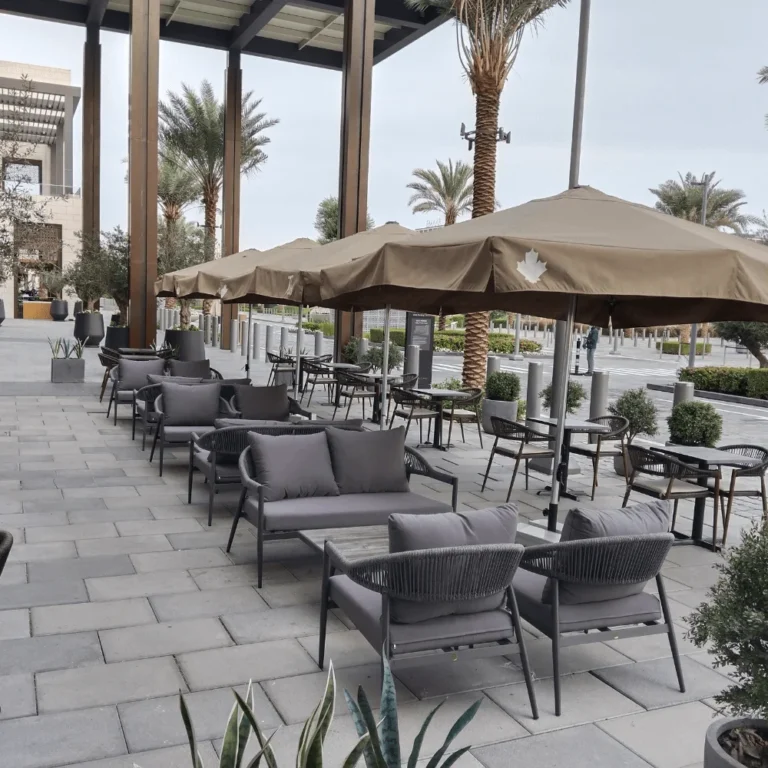
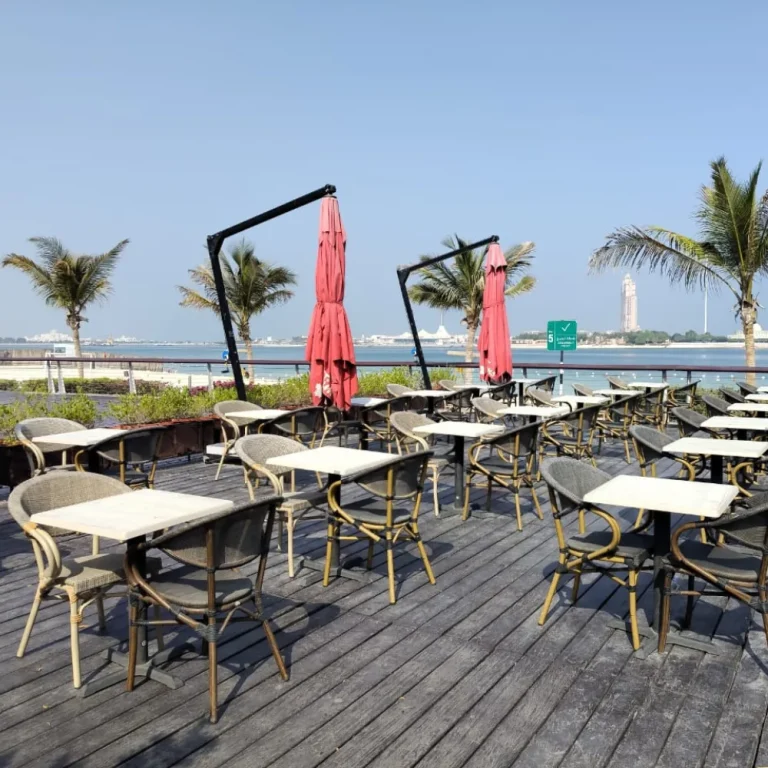
Suppliers with deep UAE market experience understand local fit-out timelines. They understand how Dubai’s climate affects material choices, particularly for outdoor dining where UV resistance and moisture tolerance are non-negotiable. They’ve already solved problems that a newer supplier hasn’t encountered yet. That accumulated experience has real value when your opening date is fixed and there’s no room for a supplier learning curve. For examples of available restaurant furniture in Dubai, see regional suppliers who specialise in hospitality ranges.
Price is one factor in this decision. It’s not the most important one. A lower price from a supplier who misses your lead time, delivers substandard pieces, or disappears after the final invoice is not a saving. It’s a cost that arrives later and in a worse form. The evaluation framework above exists precisely to prevent that outcome.
The short version: what to do before you sign anything
Here’s how to find reliable suppliers for a new restaurant setup in Dubai: verify contract-grade standards in writing, check customization credentials with real references, and lock lead times with milestone dates into your agreement before production starts.
Most procurement problems aren’t caused by bad luck. They come from skipping verification steps when time is short and opening pressure is high. Choose a supplier whose after-sales process is as clear as their catalogue, and whose UAE experience means they’ve already navigated the local delivery, climate, and fit-out dynamics you’re about to face. For a final checklist of what restaurant owners should consider when choosing furniture, review this short guide: What Restaurant Owners Should Consider When Choosing Furniture.
The Dubai restaurant market moves fast and the standards are high. Your furniture needs to hold up to both. That’s the benchmark. Najmi Furniture has been supplying commercial and hospitality venues across the UAE and GCC for many years, working with F&B operators who need production capability, brand alignment, and reliable delivery in a single supplier. If you’re furnishing a new restaurant and want to get this decision right the first time, reach out to najmi furniture team before you start comparing catalogues.